Waste & material traceability solution for sustainable facilities
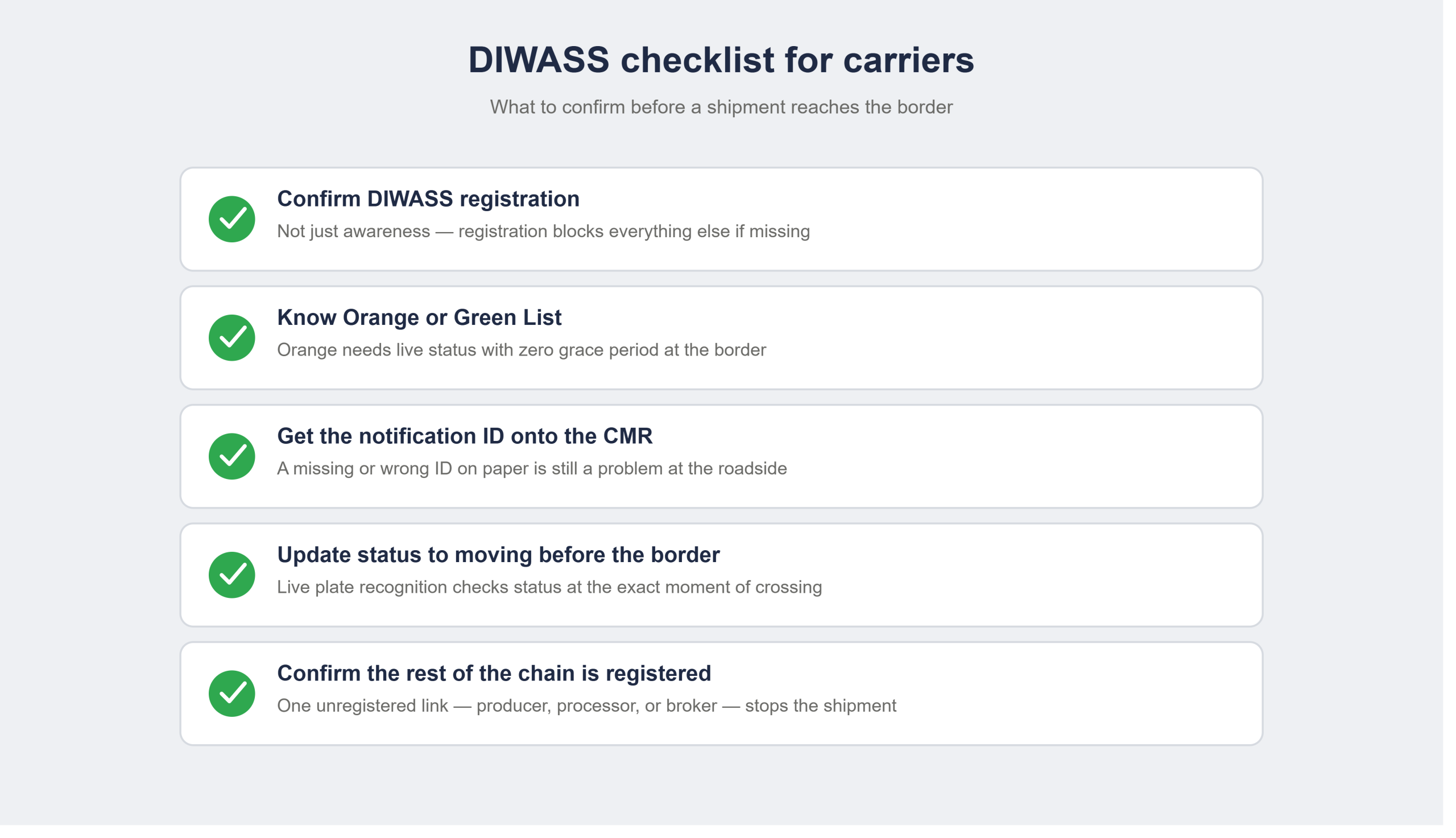
DIWASS lands on carriers differently than it does on producers or processors. You’re the one at the border. And you’re the one a roadside check stops first if a status doesn’t match reality. This DIWASS checklist for carriers covers exactly what you need to get ahead of DIWASS, instead of reacting to it.
Awareness of the DIWASS requirement isn’t the same as registration in the system. Only registration lets a carrier get named on a notification. So if registration isn’t complete yet, this is the step that blocks everything else.
Registration itself doesn’t change based on waste classification. But operational responsibilities do. Orange List shipments need the notification live and the status accurate before a border crossing — full stop, with zero grace period. Green List currently sits inside a paper transition allowance. But that ends December 31, 2026, so it’s worth planning as though it’s already gone.
Carriers miss this detail most often. The DIWASS notification ID needs to travel with the shipment on the CMR for border checks. So even a correct DIWASS record can still cause trouble at the roadside. That happens if the CMR is missing the ID, or shows the wrong one.
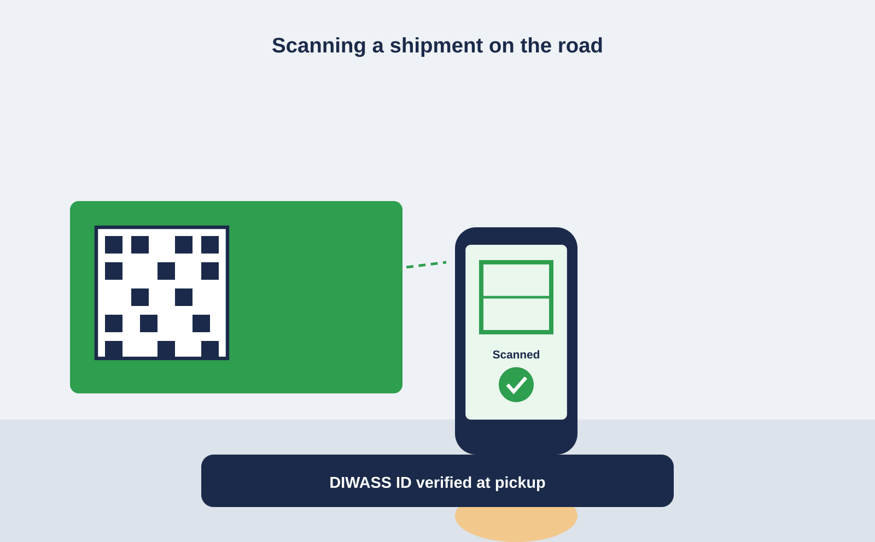
The status needs to be live before the truck crosses — not updated after the fact, once it’s already through. Enforcement runs on live plate recognition at the border. So if the DIWASS status doesn’t match reality at the exact moment a plate is scanned, the truck stays at the gate. Build this into dispatch procedure, not into “whoever remembers.”
A carrier can be fully compliant and still get stuck if the producer, processor, or broker on a given shipment isn’t registered. Confirm chain status on regular routes and long-standing clients, not just new ones. There’s a commercial angle too. Shippers can now only select DIWASS-registered carriers. So an unregistered carrier isn’t just delayed — it’s off the shortlist entirely.
A handful of cross-border runs a month, and manual portal use is perfectly workable. But run this daily across multiple drivers and routes, and manual entry quickly becomes a dispatch bottleneck rather than a compliance task.
Registration gets a carrier into the system. Discipline around status timing and documentation is what keeps that carrier moving through it — literally, at the border.
Request a demo to see how Evreka automates status sync from dispatch through to border crossing, so the DIWASS record and the CMR always match.
Download the DIWASS one-pager for the full deadline and registration breakdown, or visit the DIWASS compliance page to see where your fleet currently stands.
Ready to put your fleet to the test? Start your DIWASS compliance journey with a free consultation via the DIWASS platform, no commitment required.