Waste & material traceability solution for sustainable facilities


First, a simple question: Why AI camera system for waste management matter?
Waste management operators are being squeezed from every direction. Cities are growing. Regulations are tightening. Residents expect cleaner streets, faster response times, and transparent service, and they won’t wait for a weekly complaint form to get action. Yet most operations still rely on partly or entirely manual route checks, citizen reports, illegal dumping detection, and fill-level sensors that only tell part of the story. None of them can see what’s actually happening on the ground.
That’s why an AI camera system for waste management is a competitive necessity.
The scale of the challenge is significant. According to the World Bank, the world generates more than 2.24 billion tonnes of municipal solid waste every year, a figure expected to climb to 3.88 billion tonnes by 2050. Meanwhile, waste collection alone accounts for 50–80% of total municipal solid waste management costs, making operational efficiency the industry’s biggest lever for improvement.
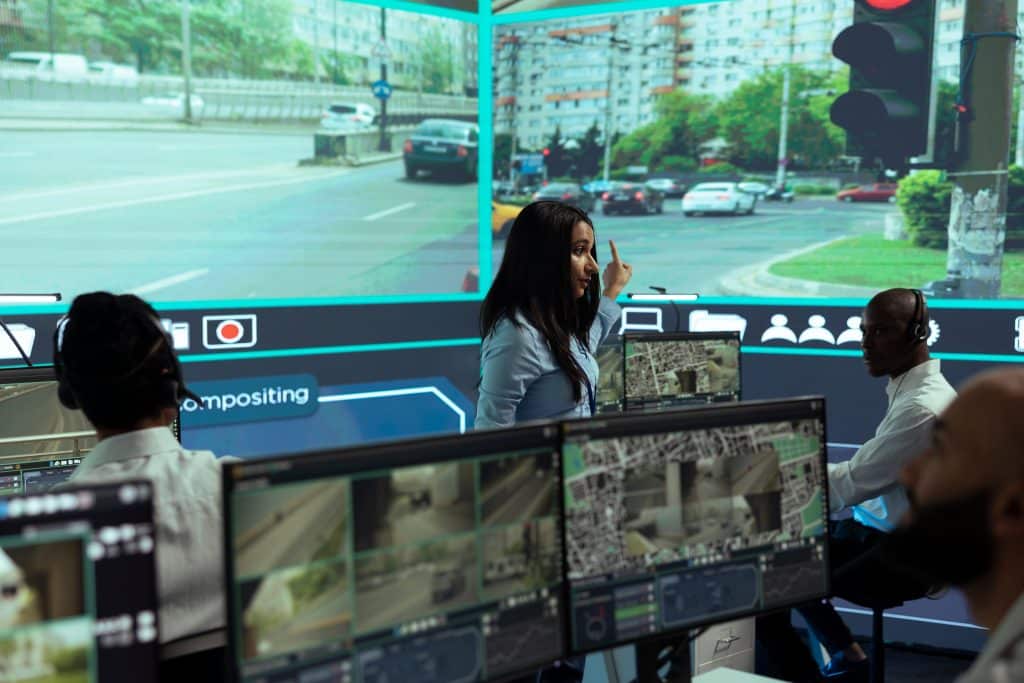
Most computer vision platforms stop at detection. They analyze an image and tell you something happened. What happens next is still a manual process.
Evreka AI is built differently.
Rather than requiring new hardware or separate inspection vehicles, Evreka AI converts your existing vehicle cameras into a full operational intelligence layer—integrated directly with Evreka360, the end-to-end waste management platform.
Every collection route becomes a continuous city-wide audit. Every detection automatically creates a case, assigns a task, and generates the visual evidence your team needs to act. Three things make this possible:

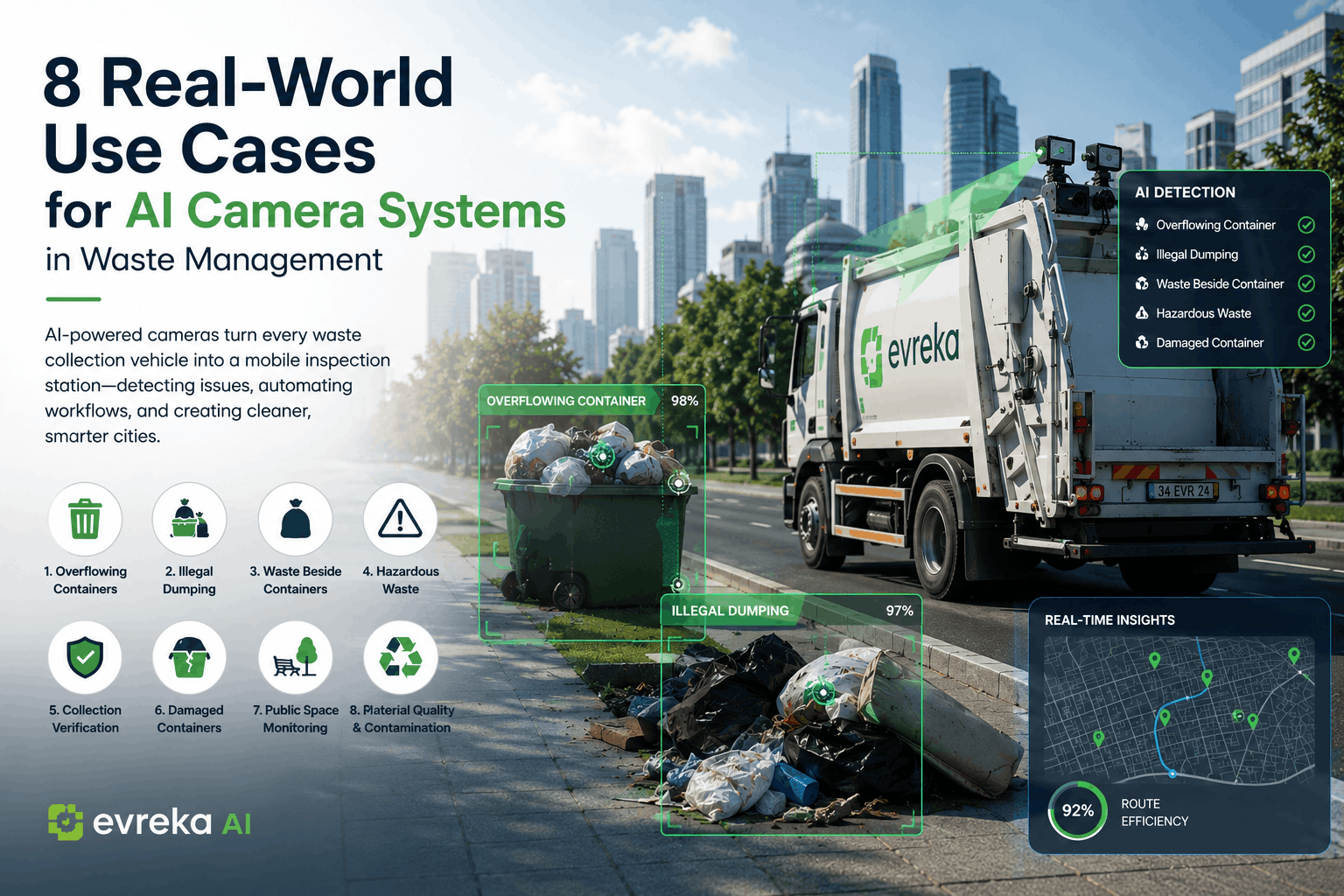
Overflowing bins don’t just look bad; they create health risks, attract pests, and cost more to clean up than they would have to prevent. Traditionally, operators found out about overflow problems one of two ways: a fill-level sensor alert, or an angry citizen call.
Evreka AI adds a third option: visual confirmation during normal collection.
Computer vision monitors fill levels continuously during routine routes, flagging containers approaching capacity before they spill. Operators receive location-stamped evidence, not just a sensor reading, enabling smarter, more proactive scheduling and a measurable reduction in overflow incidents.
Why it matters: Fewer overflows mean fewer complaints, lower cleanup costs, and better public health outcomes without adding a single extra vehicle to your fleet.
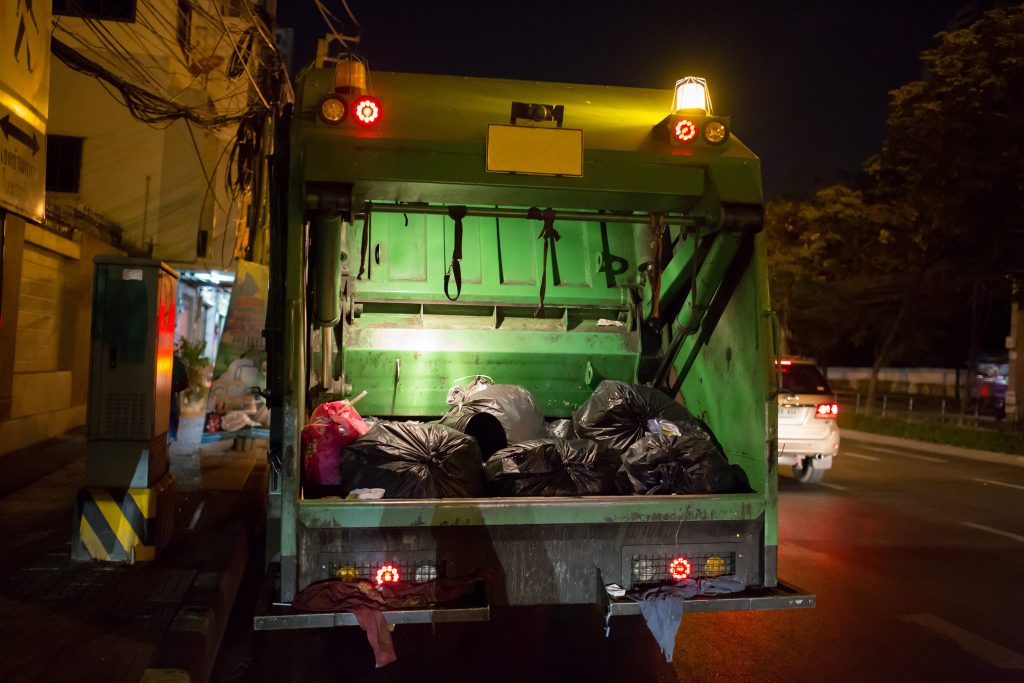
“Did the truck actually collect from this location?”
It’s one of the most common and costly disputes in waste management—and without visual evidence, it’s nearly impossible to resolve quickly.
Evreka AI automatically confirms completed collections with image-based records, creating an auditable trail for every stop. Municipalities, contractors, and commercial waste operators all get objective proof that service was delivered, time-stamped and location-verified.
Why it matters: Fewer disputes, faster resolutions, and a stronger case for service accountability when contract performance is questioned.
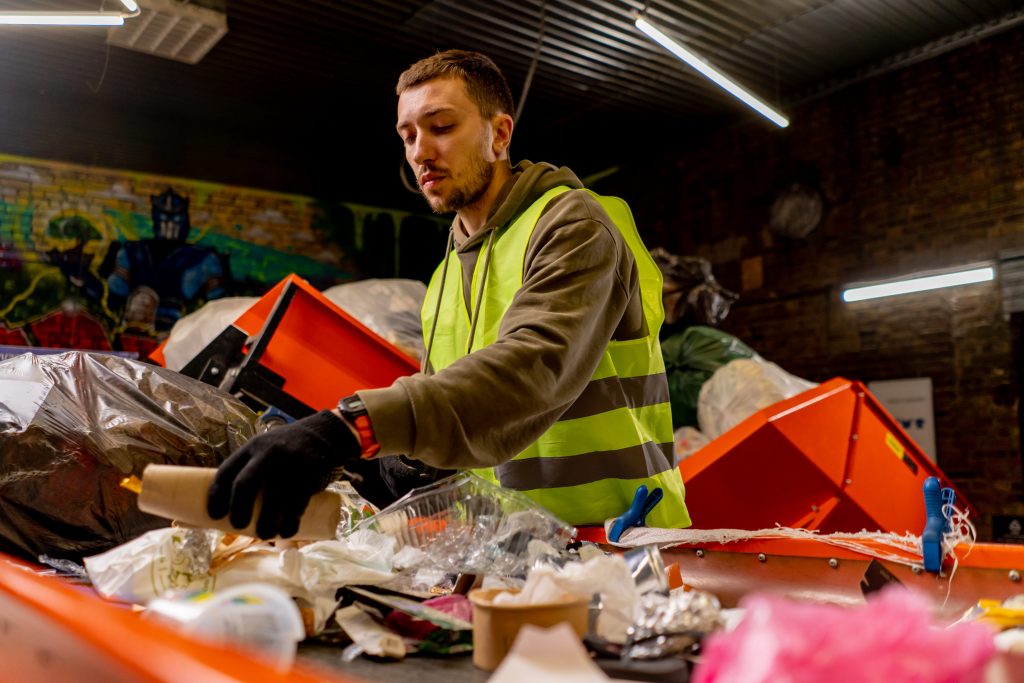
Illegal dumping costs cities millions every year in cleanup, and because it can happen anywhere, fixed cameras and periodic inspections rarely catch it fast enough to matter.
Waste collection vehicles already travel through every neighborhood, every week. Evreka AI turns them into mobile illegal dumping detection units, identifying discarded waste during normal operations and automatically generating a case, assigning cleanup tasks, and attaching photographic evidence for municipal teams.
Why it matters: Response times shrink from days to hours. Field crews arrive with evidence, not just a complaint number. And the problem is tracked from detection through resolution – automatically.

Fill-level sensors measure what’s inside a container. They’re blind to everything else.
Furniture dumped next to a bin. Construction debris stacked against a wall. Bags piled up outside an overflowing collection point. These issues are invisible to conventional monitoring until they become an environmental or public health problem.
Computer vision for waste management solves this. Evreka AI recognizes waste surrounding containers during normal collection passes, alerting operators before small issues become large ones and enabling crews to be dispatched proactively.
Why it matters: Problems don’t wait for the next inspection cycle. Catching them early prevents escalation, reduces cleanup costs, and keeps public spaces cleaner between scheduled collections.

Gas cylinders. Lithium batteries. Pressurized containers. Improperly disposed hazardous materials threaten worker safety, can cause vehicle fires, and contaminate recycling streams—often with costly downstream consequences.
Evreka AI identifies hazardous objects before they enter collection vehicles, giving operators the chance to intervene before a safety incident occurs. Detection alerts go directly to the right team, with photographic evidence attached.
Why it matters: Protecting crews is non-negotiable. Early hazardous waste detection also means fewer equipment failures, fewer regulatory violations, and lower insurance exposure.

With thousands of containers across a service area, waiting for field crews to manually report damage means problems get missed or reported too late to act on efficiently.
Evreka AI flags damaged bins and infrastructure issues during routine collection routes, delivering location-based evidence directly to maintenance teams. Repairs get prioritized based on actual operational data, not memory or guesswork.
Why it matters: Faster repair cycles improve service quality, extend container lifespan, and reduce the safety risks that come from damaged public infrastructure.
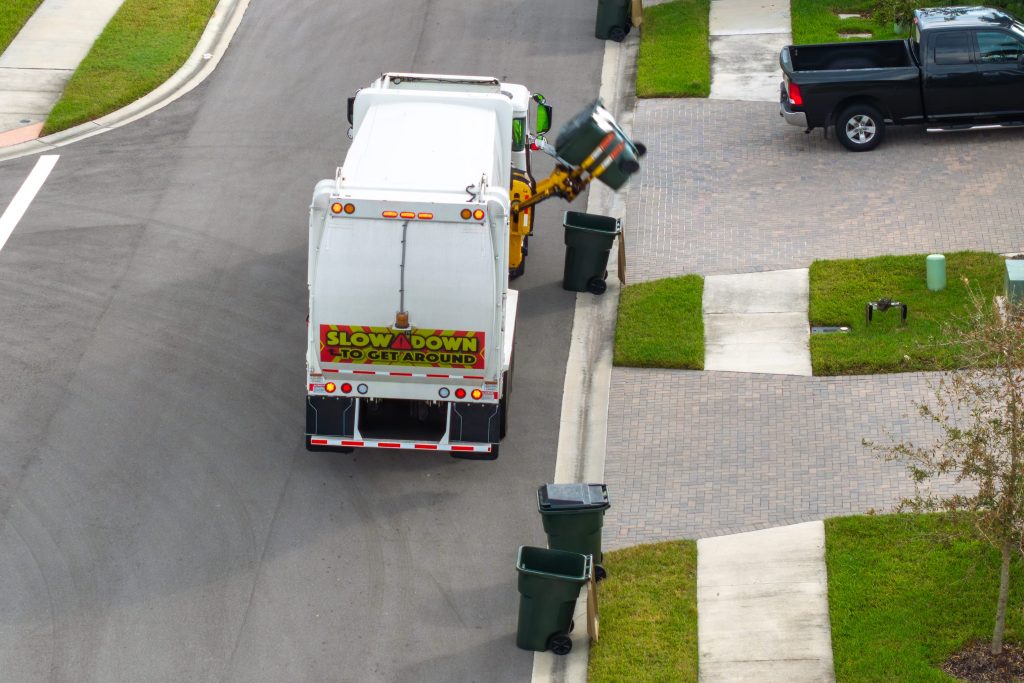
Waste collection vehicles already cover most of a city’s streets every week. Evreka AI extends the value of every route by monitoring public spaces for additional environmental issues -roadside litter accumulation, unwanted vegetation, and other maintenance needs- beyond waste collection itself.
Every trip becomes a dual-purpose mission: collect waste and monitor urban conditions. No extra vehicles. No dedicated survey teams.
Why it matters: Municipalities get broader environmental intelligence without adding operational costs. Every collection shift also generates urban monitoring data that would otherwise require separate inspection programs.

Contaminated recycling streams are expensive. A single incorrect item in the wrong bin can reject an entire load, sending valuable materials to landfill and triggering additional processing costs.
Using AI image recognition for waste, Evreka AI detects unwanted materials and contamination within collection streams before waste reaches processing facilities. Operators can act on contamination data in real time, improving material quality and reducing rejection rates at the source.
Why it matters: Higher-quality material streams support circular economy goals, reduce downstream processing costs, and improve resource recovery rates, turning a compliance challenge into a financial advantage.
Many AI vision systems work by streaming continuous video to the cloud for processing. This approach is expensive, bandwidth-intensive, and introduces latency that makes real-time decision-making difficult.
Evreka AI takes a different approach: edge computing.
Processing happens directly on the vehicle. Only metadata and evidence images are transmitted—not full video streams. The result is:
For waste fleet operators managing dozens or hundreds of vehicles across a city, edge AI is what makes the economics of smart waste management work.

Detection without action is just data.
The real value of an AI-powered waste collection system comes from what happens after an issue is identified. Evreka AI is built to close this loop automatically. When a detection event is verified, the platform can:
This end-to-end workflow eliminates manual reporting bottlenecks, ensures no detection falls through the cracks, and makes every operational event fully traceable without adding headcount or administrative overhead.
Rising global waste volumes, increasing regulatory pressure, and growing public expectations mean that operators can no longer afford to run reactive operations.
Manual inspections miss too much. Fixed sensors see too little. Citizen complaints arrive too late.
An AI camera system for waste management changes the equation. Every collection vehicle becomes a mobile environmental inspector. Every route generates operational intelligence. Every issue, from an overflowing bin to an illegally dumped couch, can be detected, documented, and resolved automatically.
With Evreka AI, waste management companies and municipalities don’t just collect waste more efficiently. They build a real-time picture of what’s happening across their entire service area—and have the tools to act on it instantly.
The question isn’t whether AI will transform waste management. It already is. The question is whether your operation will be ahead of it or catching up.
See how Evreka AI works in practice.