Waste & material traceability solution for sustainable facilities



The Product Environmental Footprint (PEF) is shifting from a voluntary reporting framework to a mandatory strategic imperative within the European Union. Far more than a passing regulatory mandate, the PEF, established by the European Commission’s JRC, is the singular, science-based methodology for quantifying a product’s environmental impact across its entire lifespan. For B2B firms operating in Europe, PEF accuracy means environmental credibility is now measured by PEF precision.
The European Green Deal is raising the stakes, positioning the PEF as the de facto standard for competitive market access. It necessitates a life-cycle assessment approach, meticulously tracking every material and process from raw input to final End-of-Life (EoL) disposition. This comprehensive view, covering 16 distinct impact categories, transforms sustainability from a reporting obligation into a strategic business function. So why has PEF accuracy become this critical? What should businesses do about it, and how can Evreka help?

While traditional Life Cycle Assessments (LCA) often allowed for methodological flexibility, the PEF framework, established by the European Commission’s Joint Research Centre (JRC), introduces a rigorous, standardized approach across 16 distinct impact categories.
Our analysis indicates that companies focusing solely on the ‘carbon footprint’ category risk failing PEF audits. A multi-perspective approach is required, balancing:

A fundamental flaw in current corporate sustainability models is the reliance on secondary, non-specific datasets for the End-of-Life (EoL) stage. Utilizing national waste averages (e.g., ‘30% average plastic recycling rate’) creates a significant margin of error that penalizes high-performing firms.
When assumptions replace verifiable data, several risks emerge:
In contrast, operational data provides measurable, defensible sustainability outcomes.
Replacing industry averages with real-world operational data enables:
This shift transforms sustainability reporting from estimation to evidence. When the PEF model operates on rough estimations rather than verified, high-resolution operational data, the result is a distorted environmental score that penalizes your company and obscures real opportunities for improvement.
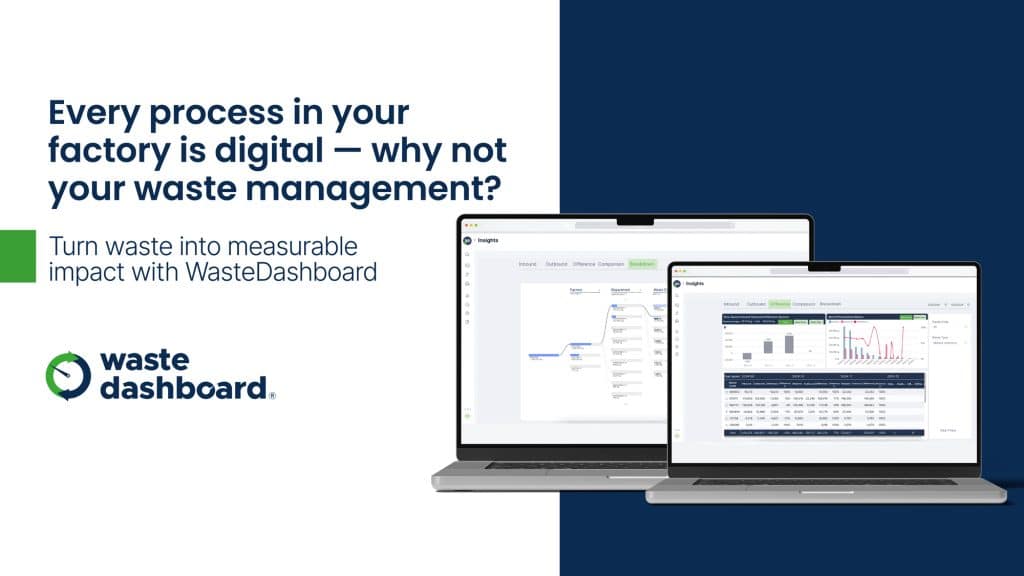
Evreka WasteDashboard is a product of recognizing that modern waste management is fundamentally a data challenge. It is also a model validation engine for PEF and CSRD reporting. It closes the gap between theoretical circularity and operational fact.
In brief, how does Evreka help in minimizing the PEF ‘Uncertainty Factor’? By providing primary, site-specific data (Tier 1 data) instead of secondary industry averages (Tier 3 data), Evreka reduces the statistical penalties applied during the PEF verification process.
Let’s begin with a question: why is EoL data considered the most volatile variable in PEF? EoL outcomes are often external to the manufacturer’s direct control. Without a platform like Evreka to track the downstream journey, companies are forced to use generic data, which lacks the resolution to prove genuine circularity. Unlike periodic audits, Evreka provides a continuous data stream.
Utilizing IoT-integrated sensing, the platform quantifies contamination at the source. This provides the “Proof of Quality” required by EU auditors to validate that materials destined for recycling actually meet the processing standards of circular facilities.
The platform ensures that the same dataset used for PEF calculations is structurally aligned with:

Transitioning to verified data management offers a dual-track advantage:
A credible Product Environmental Footprint is the linchpin of modern corporate sustainability. Evreka eliminates the hazardous reliance on estimated data, empowering businesses to transition from merely reporting impact to strategically measuring and managing it as a competitive asset.
We turn the waste management blind spot into a demonstrable source of sustainability gains, operational efficiency, and verifiable strength across the global market.
It is time to transition your PEF strategy from compliance estimation to factual certainty. Explore the Evreka WasteDashboard and unlock the power of verified EoL data for a superior PEF outcome.
Request a demo today to secure your highest PEF score.