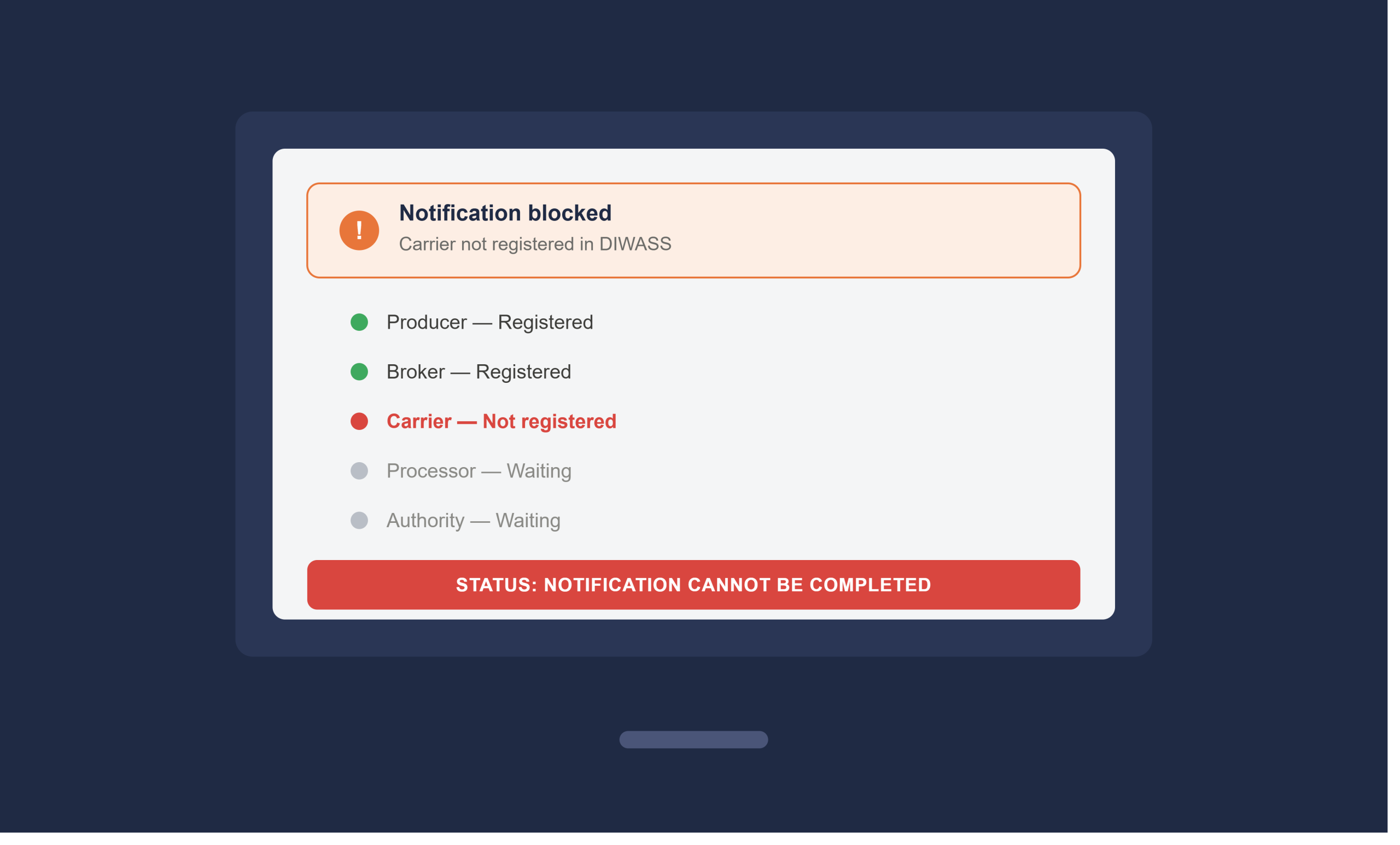
The DIWASS chain dependency risk is simple to describe and easy to miss until it hits you. A producer is ready to ship. The paperwork is in order, the truck is booked — but the system still won’t let them file the notification, because the carrier hasn’t registered in DIWASS yet. As a result, that single gap is quietly becoming the biggest blocker in early DIWASS enforcement.
Why One Unregistered Partner Stops the Whole Chain
DIWASS notifications work by naming every party in a shipment: producer, carrier, processor, and broker where relevant. But the system can only name a party that already exists in it. So if a regular carrier, or the receiving processor, hasn’t registered, there’s no way to select them. There’s no manual add option and no placeholder. The notification simply stays open until every named party is in the system. Current tracking shows that every chain partner, 100% of them, must register before a notification can clear. Not most. Not just the key ones. All of them.
The DIWASS Chain Dependency Risk: Costs That Extend Beyond a Blocked Shipment
A stalled notification is the immediate pain, but two other costs follow fast. The first is commercial: shippers can now only pick DIWASS-registered carriers when they build a chain. An unregistered carrier isn’t just delayed. It’s off the shortlist entirely. A competitor who registered first quietly takes the slot that used to be theirs. The second is legal. A new law proposed for January 2026 links repeated EVOA violations to the Environmental Crime Directive. In other words, a simple paperwork mistake could eventually count as a crime if it keeps happening.
[Image: What one gap in the chain actually costs. Alt text: DIWASS chain dependency risk statistics lost contracts criminal liability]
Who Feels the DIWASS Chain Dependency Risk First
Producers who rely on smaller or regional carriers are usually the first to spot a gap. Often, it happens at the worst possible time. Brokers managing multi-client chains face a bigger version of the same risk. Because one weak link anywhere stalls everything downstream. Processors often assume registration is only the shipper’s job. So they’re surprised when a shipment they’re expecting never gets a notification, simply because the gap sits elsewhere in the chain.
Closing the Gap Before It’s Tied to a Live Shipment
There are only two ways to close a chain gap once you find it. Push the unregistered partner to complete registration — this usually takes a few working days. Or find a registered alternative — but that only works cleanly if a long-term contract doesn’t lock you into the relationship. Either way, neither is a same-day fix, which is exactly why it’s worth getting ahead of it. Start with a short audit. List every carrier, processor, and broker you use for cross-border shipments. Then confirm — don’t assume — that each one is registered.
Ready to See Where Your Chain Stands?
Your own registration is only ever half the picture. The other half is every partner you depend on to move a shipment across a border. And that’s usually where the real risk is hiding.
Request a demo to see how Evreka verifies every carrier and processor’s DIWASS ID automatically, at booking, before a gap becomes a blocked shipment.
Test your own chain against the risk simulator on the DIWASS compliance page or download the DIWASS one-pager for the full registration rundown.
Ready to close the gap in your chain? Start your DIWASS compliance journey with a free consultation via the DIWASS platform, no commitment required.
→ Request a demo