A recovered materials marketplace solves a simple problem that the recycling industry has lived with for decades: material is collected, sorted and baled, but finding the right buyer for it still depends on phone calls, personal networks and brokers. Recovered materials only create value once they reach someone who can use them, and that step is often the slowest part of the chain.
The hidden cost of finding the right outlet
For a sorting facility, a collector or a manufacturer with production residues, an unsold lot is not just unsold stock. It occupies storage space, ties up working capital and, in some cases, loses value the longer it waits. Outlets are usually found through relationships, so a lot that one buyer would pay well for can sit unseen while the seller searches for a counterparty elsewhere.
Buyers face the mirror image of this problem. A recycler or manufacturer looking for paper, plastics, metals, glass or textiles has to trust a description. What does the lot really contain? Where does it come from? Who stands behind it? Without evidence, every purchase carries a quality risk, and that risk is priced into the deal.
Paperwork and trust slow every deal
Even once two parties agree, the deal is not done. Transport documents, waste codes and, for cross-border moves, shipment notifications are assembled by hand for each load, and a single mistake can mean delays. Trading with an unknown party adds a further worry: will the material be accepted, and will the payment arrive?
What a verified marketplace changes
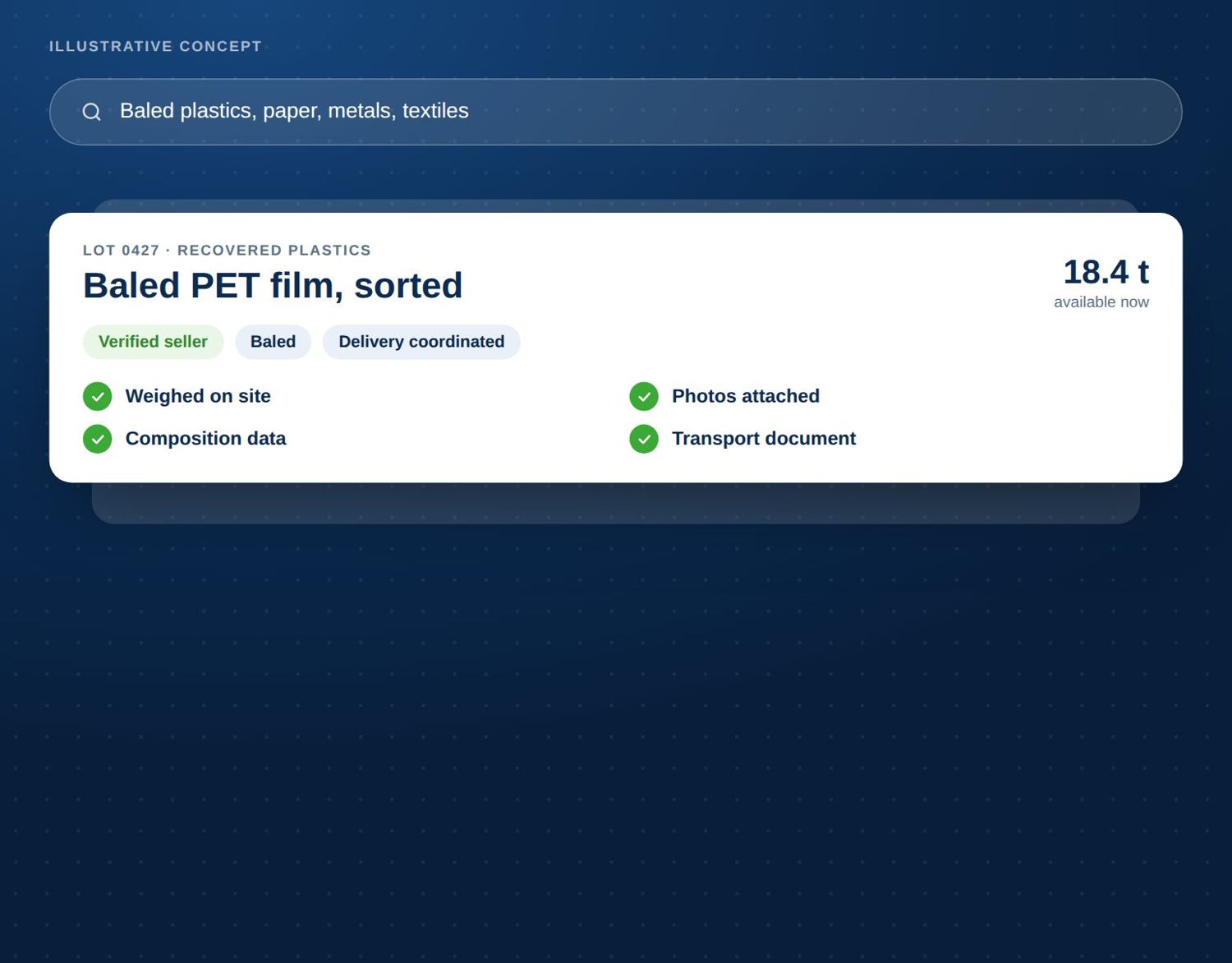
The idea behind Evreka Marketplace is to bring both sides into one place and attach the evidence to the lot itself. A seller lists a lot once, with its material type, volume and quality details, and makes it visible to verified buyers. A buyer searches for the material they need and sees who can supply it. Because the marketplace is built on the operational records already held in Evreka360 and WasteDashboard, a listing can carry real weights, photos and composition data instead of promises.
Three things make the difference in practice:
Verified participants. Sellers, buyers and logistics partners are checked before they trade, which builds trust between parties who have never worked together.
Traceable lots. Quality is shown rather than claimed, because weighing records and photos stay attached to the lot from listing to delivery.
Documents prepared with the deal. Transport and shipment paperwork is prepared alongside the trade, using the same data that drives the Begeleidinsbrief, EURAL codes and DIWASS-Hub reporting.
Evreka Marketplace today
Evreka Marketplace is available on the Evreka website, with a focus on recovered and secondary materials such as paper and cardboard, plastics, metals, glass, textiles and selected industrial residues. To see how it would work for your organisation, you can request a demo and the team will walk you through it.
We use cookies on our website to give you the most relevant experience by remembering your preferences and repeat visits. By clicking “Accept All”, you consent to the use of ALL the cookies. However, you may visit "Cookie Settings" to provide a controlled consent.
This website uses cookies to improve your experience while you navigate through the website. Out of these, the cookies that are categorized as necessary are stored on your browser as they are essential for the working of basic functionalities of the website. We also use third-party cookies that help us analyze and understand how you use this website. These cookies will be stored in your browser only with your consent. You also have the option to opt-out of these cookies. But opting out of some of these cookies may affect your browsing experience.
Necessary cookies are absolutely essential for the website to function properly. These cookies ensure basic functionalities and security features of the website, anonymously.
Cookie
Duration
Description
cookielawinfo-checkbox-analytics
11 months
This cookie is set by GDPR Cookie Consent plugin. The cookie is used to store the user consent for the cookies in the category "Analytics".
cookielawinfo-checkbox-functional
11 months
The cookie is set by GDPR cookie consent to record the user consent for the cookies in the category "Functional".
cookielawinfo-checkbox-necessary
11 months
This cookie is set by GDPR Cookie Consent plugin. The cookies is used to store the user consent for the cookies in the category "Necessary".
cookielawinfo-checkbox-others
11 months
This cookie is set by GDPR Cookie Consent plugin. The cookie is used to store the user consent for the cookies in the category "Other.
cookielawinfo-checkbox-performance
11 months
This cookie is set by GDPR Cookie Consent plugin. The cookie is used to store the user consent for the cookies in the category "Performance".
viewed_cookie_policy
11 months
The cookie is set by the GDPR Cookie Consent plugin and is used to store whether or not user has consented to the use of cookies. It does not store any personal data.
Functional cookies help to perform certain functionalities like sharing the content of the website on social media platforms, collect feedbacks, and other third-party features.
Performance cookies are used to understand and analyze the key performance indexes of the website which helps in delivering a better user experience for the visitors.
Analytical cookies are used to understand how visitors interact with the website. These cookies help provide information on metrics the number of visitors, bounce rate, traffic source, etc.
Advertisement cookies are used to provide visitors with relevant ads and marketing campaigns. These cookies track visitors across websites and collect information to provide customized ads.